L'écosystème numérique connaît la transition la plus significative dans la récupération d'informations depuis la commercialisation d'Internet. Le paradigme de recherche traditionnel est supplanté par un modèle génératif qui se concentre sur les concepts sémantiques et les réponses fondées.
D'ici la fin de 2026, les recherches suggèrent que le volume des moteurs de recherche traditionnels diminuera d'environ 25% car les utilisateurs s'appuient de plus en plus sur des agents conversationnels tels que ChatGPT, Gemini et Perplexity pour obtenir des informations directes. Ce changement structurel —« Le Grand Découplage »— signifie que la recherche d'informations se sépare du clic vers une source.
Définition de l'entité clé
Dans le contexte de Économie du raisonnement— votre site Web n'est plus une collection de pages ; c'est un Nœud dans un graphe de connaissances. Les robots d'exploration IA sont les "capteurs" qui convertissent la réalité de votre marque en coordonnées mathématiques.
I. La taxonomie des robots d'exploration IA modernes : entraînement vs récupération
L'écosystème moderne des robots d'exploration est divisé en deux groupes fonctionnels principaux : formation des robots et bots de recherche/récupération. Pour optimiser efficacement, vous devez comprendre quel agent visite votre site et ce qu'il a l'intention de faire de vos données.
🤖 Types de robots d'exploration IA et stratégie
1. Les archivistes : Formation des robots d'exploration
Bots d'entraînement, tels que GPTBot d'OpenAI et ClaudeBot d'Anthropic, sont conçus pour la collecte massive de données d'archives afin de construire la "connaissance paramétrique" des modèles fondamentaux. Ils consomment une bande passante élevée et renvoient rarement du trafic vers la source. ClaudeBot a un ratio de crawl-vers-référence de près de 24,000:1.
2. Les éclaireurs : robots d'exploration et robots RAG
Bots de recherche comme OAI-SearchBot et PerplexityBot agissent comme des agents de récupération en temps réel. Ils récupèrent du contenu en direct pour ancrer la "connaissance contextuelle" lors d'interactions spécifiques avec l'utilisateur. Ce sont les agents que vous voulez sur votre site, car ils génèrent des citations et une visibilité "Part de Modèle".
| User-Agent | Objectif opérationnel | Persistance | Stratégie |
|---|---|---|---|
| GPTBot | Entraînement de modèle de fondation | Permanent | Limitation du débit pour la bande passante |
| OAI-SearchBot | Recherche ChatGPT en temps réel | Temporaire | Toujours permettre le GEO |
| ChatGPT-Utilisateur | Navigation déclenchée par l'utilisateur | Session uniquement | Autoriser les références |
| PerplexityBot | Récupération par le moteur de réponse | Haute fréquence | Essentiel pour la citation |
Si vous n'êtes pas sûr que votre infrastructure bloque ces agents essentiels, utilisez notre validateur robots.txt pour garantir que vos portes numériques soient ouvertes à l'avenir de la découverte.
II. Les fondements mathématiques : comment les LLM « voient » votre texte
Pour comprendre comment une IA "lit", nous devons dépasser la métaphore de la lecture pour entrer dans la réalité de la vectorisation mathématique. Lorsqu'un robot d'exploration récupère une page, il ne traite pas les mots comme des symboles linguistiques ; il les convertit en valeurs numériques dans un espace de haute dimension.
Vectorisation et Embeddings
Le processus commence par un modèle d'intégration. Ce réseau neuronal spécialisé transforme un bloc de texte en un "vecteur" — une chaîne de nombres (souvent 768 ou 1 536 dimensions) qui représente la coordonnée sémantique de ce contenu. Le principe fondamental est que les concepts sémantiquement similaires auront des vecteurs géométriquement proches les uns des autres.
Similarité Cosinus : Le Score de Pertinence
La métrique principale utilisée par les LLM pour déterminer si le contenu de votre site Web est pertinent par rapport à la requête d'un utilisateur est Similarité Cosinus. Si les vecteurs pointent dans la même direction, la similarité est de 1 (une correspondance parfaite). Si votre contenu est enfoui dans un jargon marketing vague, son vecteur s'éloigne de l'intention de l'utilisateur, conduisant à zéro citation.
Pour garantir que votre contenu possède le poids factuel nécessaire pour obtenir des scores de similarité élevés, utilisez le outil gratuit de comptage de mots pour auditer la densité de votre contenu.
III. Le pipeline RAG : les 6 étapes de l'ingestion par l'IA
Lorsqu'un utilisateur pose une question à ChatGPT ou Perplexity, le système ne se contente pas de rechercher ; il exécute un système sophistiqué Génération Augmentée par Récupération (RAG) pipeline. Comprendre ces étapes est essentiel :
Analyse de l'intention de requête
L'IA classe l'invite de l'utilisateur (factuelle, procédurale, comparative).
Indexation basée sur les embeddings
Le moteur convertit la requête en un vecteur de concept sémantique.
Récupération multi-méthodes
Le système effectue une recherche hybride (mots-clés + récupération dense neuronale).
Classement multi-couches (L1–L3)
Un reclassificateur à trois niveaux note les documents candidats. En dessous du seuil d'environ 0,7 = rejeté.
Assemblage de requêtes structurées
Assemble des extraits, des métadonnées et des marqueurs de citation avant de générer.
Synthèse LLM contrainte
Le LLM génère la réponse, liée aux documents cités.
Si votre site n'est pas "prêt pour la récupération", vous serez filtré à l'étape 4. Notre guide GEO complet offre une plongée en profondeur pour survivre à ce parcours de citations.
IV. Le piège JavaScript : pourquoi les robots IA voient des sites Web "vides"
⚠️ La barrière du rendu
L'un des plus erreurs catastrophiques dans le SEO international moderne repose sur le rendu côté client. Les robots d'exploration IA sont souvent « paresseux » ou limités en ressources ; ils lisent principalement le HTML statique renvoyé par le serveur.
Le problème :
Si votre site Web utilise un plugin de traduction hérité qui échange des mots via JavaScript après le chargement de la page, le robot IA — qui n'exécute souvent pas de scripts — ne voit que le contenu original en anglais ou une coquille vide. Cela rend vos versions traduites invisible pour citation sur leurs marchés respectifs.
La solution :
Votre site doit utiliser Rendu côté serveur (SSR) ou Livraison par réseau périphérique. C'est l'avantage principal du Modèle d'optimisation parallèle MultiLipi: nous pré-rendons votre contenu traduit à la périphérie, garantissant que chaque agent IA reçoit du HTML instantané et consultable dans 120+ langues.
Erreurs de redirection Accept-Language
De nombreux sites implémentent des redirections "utiles" basées sur l'en-tête Accept-Language de l'utilisateur. Cependant, les robots d'exploration d'IA envoient souvent un en-tête "en-US" par défaut ou aucun. Si votre site redirige automatiquement ces requêtes vers votre page d'accueil anglaise, vous "verrouillez" effectivement le robot d'exploration hors de vos sous-répertoires localisés.
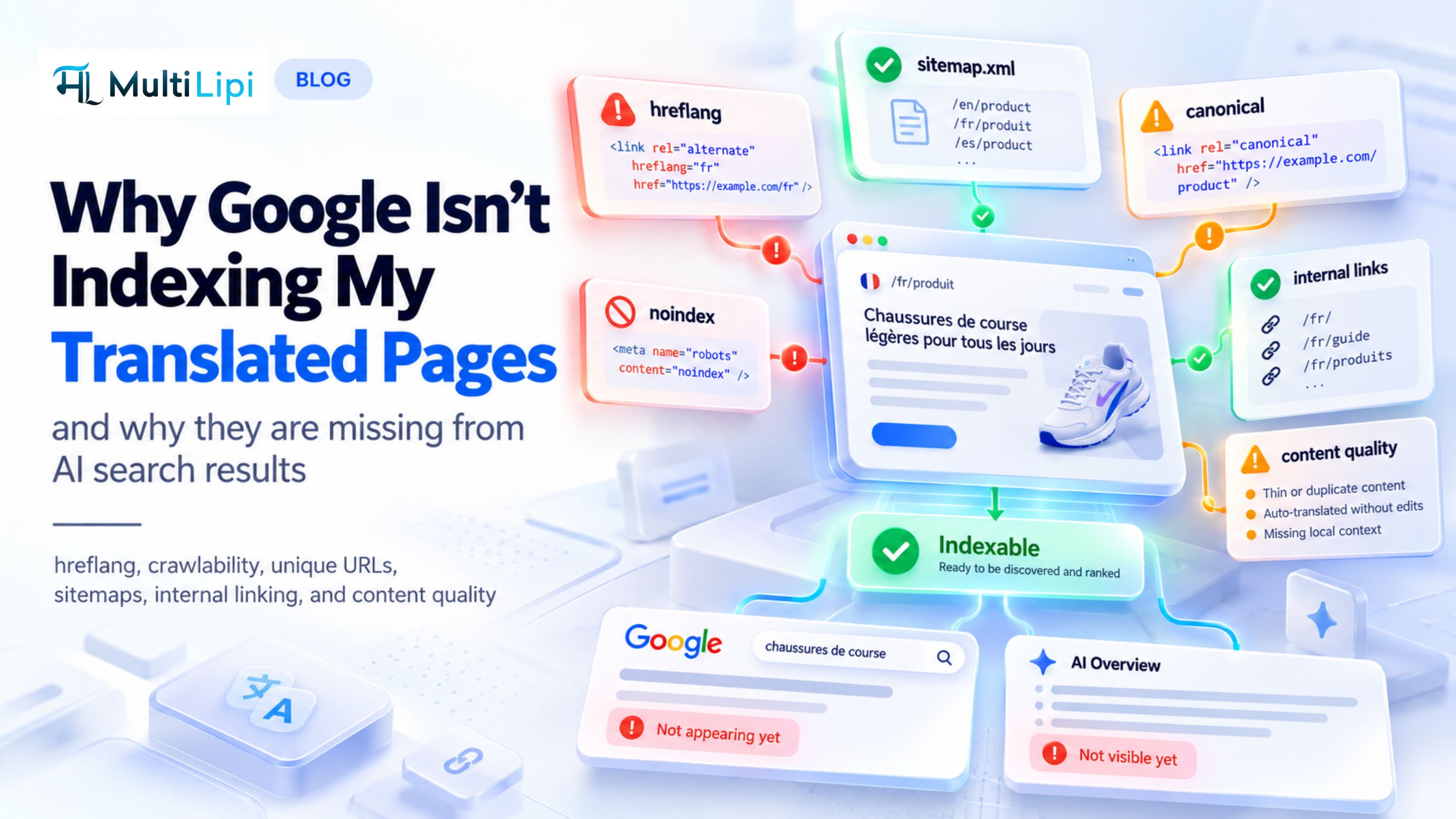
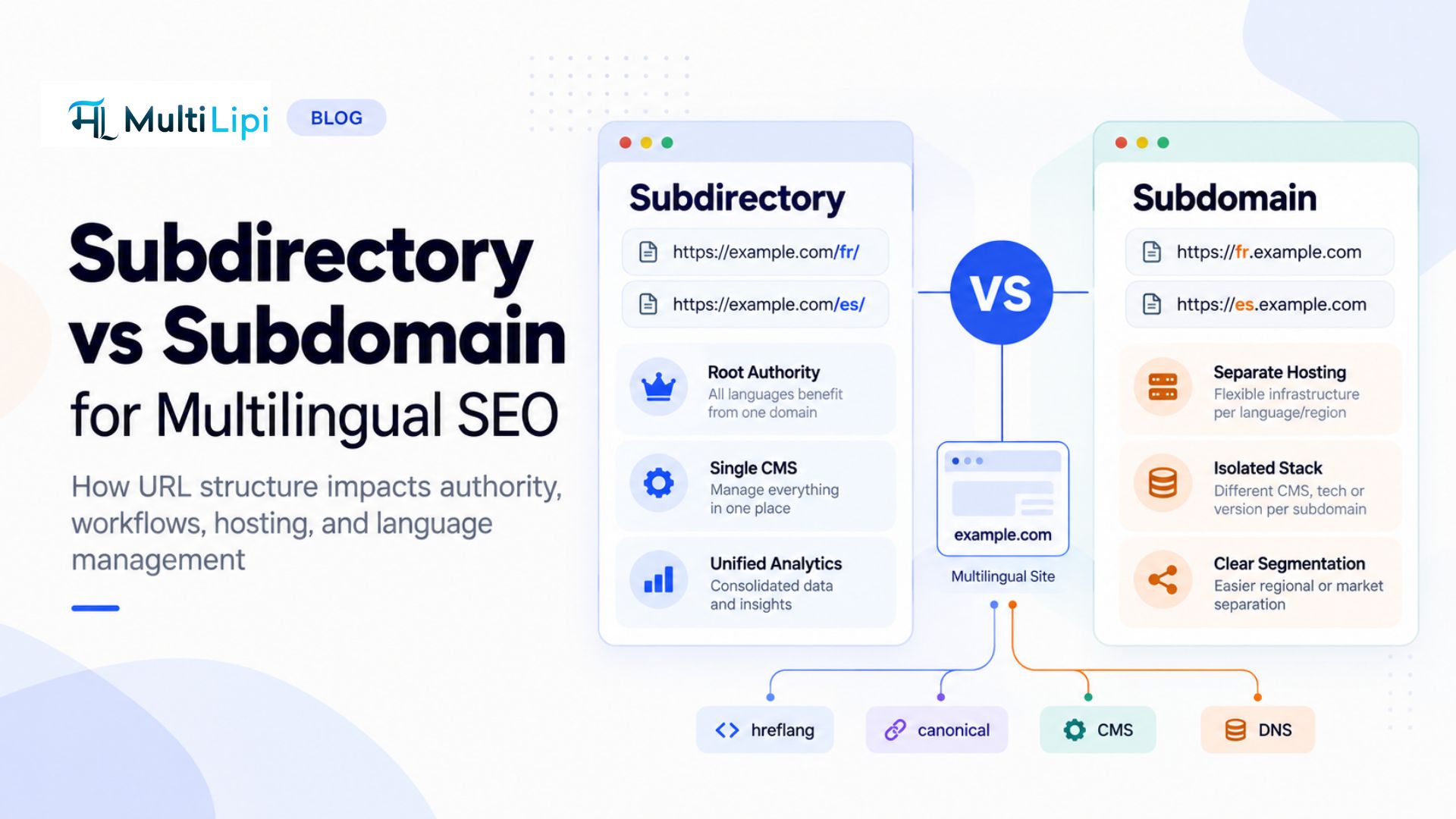
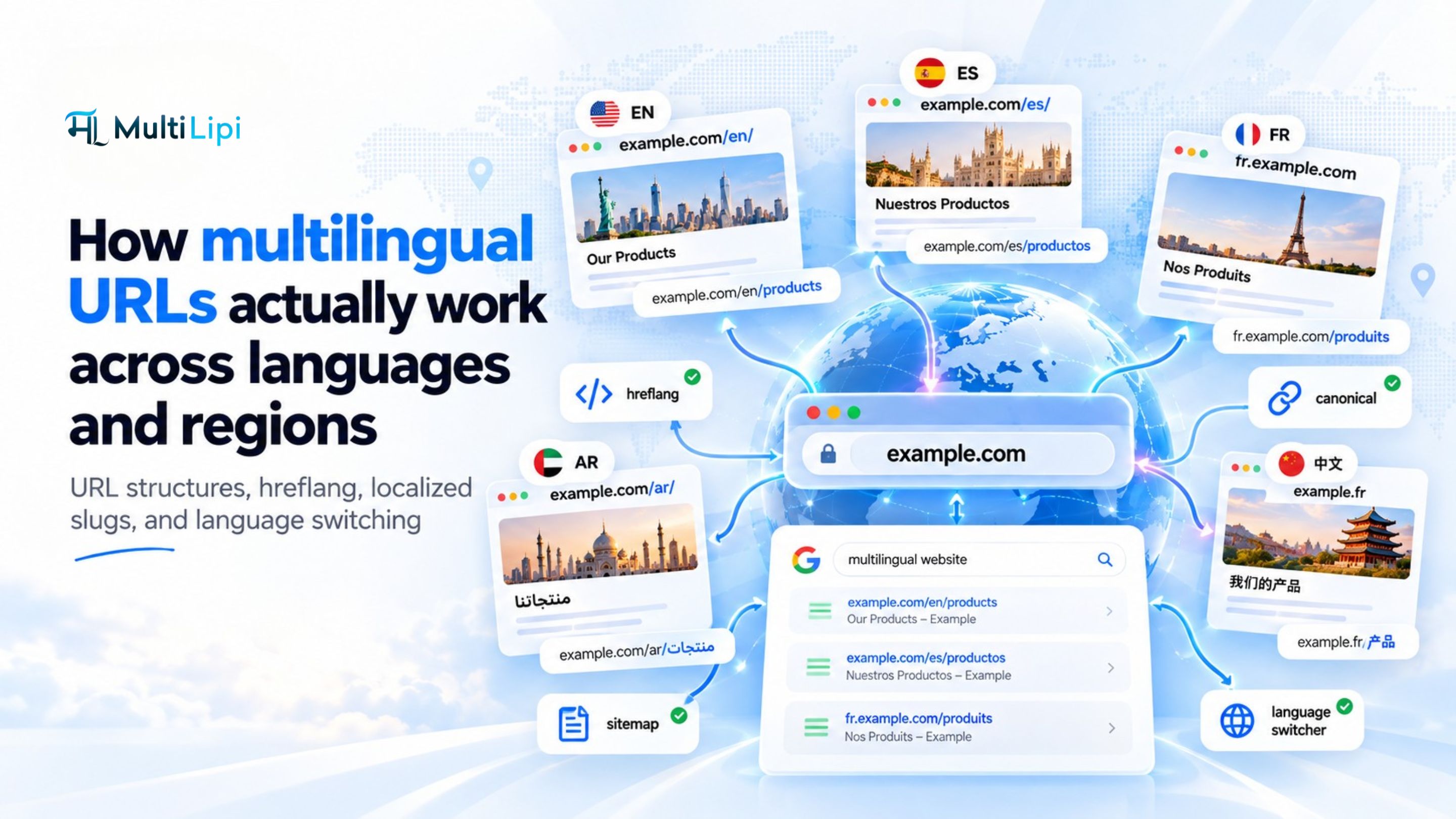
Assurez-vous que chaque langue existe à une URL unique et indexable (par exemple, /fr/ ou /es/) et vérifiez vos signaux avec notre Vérificateur hreflang.
V. Structuration du contenu pour la découverte : les modèles AED et BLUF
Les moteurs d'IA ne « lisent » pas vos articles de blog longs ; ils en « extraient » des morceaux. Pour être lisible par une machine, vous devez adopter le Réponse-Preuve-Profondeur (AED) modèle.
1. La règle BLUF (Bottom Line Up Front - L'essentiel d'abord)
La recherche montre que 44.2% des citations proviennent des 30 % premiers du contenu. Vous devez commencer par une réponse directe de 40 à 60 mots qui reflète la requête conversationnelle de l'utilisateur.
2. Statistiques et citations d'experts
L'étude de Princeton a démontré que :
- Ajout Statistiques augmente la visibilité de l'IA en 30.6%
- Ajout Citations d'experts augmente les taux de citation de 40.9%
Les machines ont "faim de faits". Elles privilégient les sources qui fournissent des données vérifiables et de "haute entropie" plutôt que des affirmations de campagne vagues. Utilisez notre guide AEO complet pour restructurer vos pages pour l'extraction.
VI. Ingestion multilingue et l'espace vectoriel universel
En 2026, la recherche par IA est multilingue par défautLes systèmes de niveau expert utilisent des plongements interlingues pour créer un "espace vectoriel universel". Cela signifie qu'une requête en espagnol peut récupérer un document en allemand si le sens sémantique est identique.
Cependant, "l'écart d'invisibilité" est élargi lorsque les marques traitent la traduction comme un simple échange de mots. La traduction littérale perd le Signaux d'entité—le contexte local spécifique et la terminologie— que les modèles d'IA utilisent pour vérifier l'autorité dans une région spécifique.
Le Moteur de contexte global MultiLipi est conçu pour combler ce fossé. Il ne se contente pas de traduire des mots ; il localise l'intention sémantique, garantissant que votre "ID d'entité" reste cohérent entre l'arabe, le japonais et le français. Cela vous permet de faire évoluer l'autorité de votre marque sans perdre le "Gain d'information" qui déclenche les citations par l'IA.
VII. Maximalisme de schéma : Le passeport d'entité
L'ère du schéma minimal est révolue. Pour la visibilité de l'IA, nous adoptons Maximalisme de Schéma. Ceci implique l'utilisation de JSON-LD imbriqué (l'approche @graph) pour fournir un "passeport" lisible par machine pour votre marque.
Les propriétés critiques pour 2026 incluent :
connaîtLaLangue
Déclarer explicitement les capacités multilingues de votre organisation.
sameAs
Lier votre site à des nœuds faisant autorité comme Wikidata, Wikipedia et les profils sociaux officiels.
FAQPage
Fournir des blocs de questions-réponses clairs que les systèmes RAG peuvent "extraire" verbatim.
En implémentant Optimisation MultiLipi LLM, ces structures de données complexes sont automatiquement injectées et localisées, donnant aux modèles d'IA la confiance nécessaire pour vous citer comme la « Source de Vérité » sur chaque marché.
VIII. Mesurer la "part de modèle" (SoM)
À l'ère du zéro clic, les métriques traditionnelles comme la "Position Moyenne" et le "Nombre Total de Clics" perdent leur pouvoir prédictif. Si un utilisateur obtient une réponse synthétisée qui recommande votre produit, vous avez gagné, même s'il ne visite jamais votre site.
Fréquence de citation
Fréquence à laquelle les 5 principaux LLM (GPT-4, Claude, Gemini, Perplexity, SearchGPT) citent votre domaine.
Taux d'inclusion
Le pourcentage d'invites pertinentes où votre marque est explicitement mentionnée.
Précision du sentiment
L'IA décrit-elle votre marque avec précision, ou hallucine-t-elle vos fonctionnalités ?
Les équipes avant-gardistes utilisent Moteur de contexte global de MultiLipi pour surveiller ces métriques dans plus de 120 langues. Lisez notre études de cas pour découvrir comment des marques comme Hotel Continentale ont augmenté leurs réservations directes de 60 % en se concentrant sur le « Partage de citations » plutôt que sur le « Classement des mots clés ».
IX. Feuille de route stratégique pour 2026
Pour pérenniser votre infrastructure de découverte numérique face à la baisse de 25 % du trafic de recherche traditionnel, suivez cette feuille de route en 5 étapes :
Audit Technique
Assurez-vous que les robots d'exploration de l'IA ne sont pas bloqués par votre WAF ou robots.txt. Confirmez que votre site est rendu côté serveur.
🛠️ Utilisez le validateur Robots.txtDésambiguïsation d'entités
Implémentez un schéma maximaliste. Définissez explicitement votre marque, vos produits et vos experts comme des entités distinctes dans le graphe de connaissances mondial.
🛠️ Utiliser l'optimisation LLMImplémenter une architecture "Réponse d'abord"
Restructurez vos pages de grande valeur en utilisant les modèles BLUF et AED. Remplacez les introductions creuses par des « blocs de citation » denses en faits.
Mise à l'échelle multilingue
Arrêtez d'utiliser des plugins de traduction basiques. Utilisez une plateforme qui préserve l'intention sémantique et le "Gain d'Information" à travers les marchés.
🛠️ Explorer les tarifs de MultiLipiDominez la couche de corroboration
Les modèles d'IA valorisent ce que les autres disent de vous. 85 % des mentions de marque dans les réponses de l'IA proviennent de domaines externes tiers comme Reddit, les sites d'actualités et les listes sectorielles.
Conclusion : Ne soyez pas un fantôme indexé
La baisse du volume de recherche traditionnel n'est pas une condamnation à mort pour votre marque ; c'est une relocalisation d'opportunité. Être "indexé" n'est plus le but — être synthétisé l'est.
En comprenant les mécanismes techniques des robots d'exploration IA et en réorganisant votre contenu pour le pipeline RAG, vous pouvez transformer la menace de perte de trafic en une opportunité de visibilité mondiale sans précédent. Alors que la recherche se transforme en raisonnement, assurez-vous que c'est votre marque à laquelle les machines pensent.
Êtes-vous prêt à retrouver votre visibilité IA ?
Arrêtez de traiter la recherche IA comme un mystère. Traitez-la comme une infrastructure. Commencez votre voyage avec MultiLipi aujourd'hui.
Foire aux questions (FAQ)
Pourquoi mon site est-il classé sur Google mais n'apparaît-il pas dans ChatGPT ?
C'est le « fossé d'invisibilité ». ChatGPT et Google utilisent des signaux différents. Alors que Google accorde toujours une grande importance aux backlinks, ChatGPT privilégie l'« adéquation contenu-réponse », la densité factuelle et l'extractibilité structurelle.
Les modèles d'IA peuvent-ils lire le contenu derrière une connexion ou un paywall ?
En général, non. Les robots d'entraînement et de recherche respectent les murs d'authentification. Si vous souhaitez que vos idées d'experts soient citées, vous devez fournir un résumé public consultable ou un bloc "TL;DR".
Le nombre de mots compte-t-il toujours pour la lecture par l'IA ?
La qualité prime sur la quantité. Les modèles d'IA ont des fenêtres de contexte limitées. Un article de 500 mots rempli de statistiques originales et de citations d'experts a 10 fois plus de chances d'être cité qu'un guide de 3 000 mots de texte générique.
À quelle fréquence dois-je actualiser mon contenu pour GEO ?
Les moteurs d'IA ont un fort biais de récence. Pour Perplexity, le contenu mis à jour dans les 30 derniers jours reçoit des taux de citation nettement meilleurs. Nous recommandons un cycle de « Rafraîchissement statistique » de 30 jours pour vos pages piliers.
Comment MultiLipi aide-t-il à l'exploration par l'IA ?
Nous fournissons l'"Infrastructure de découverte". Nous gérons le SSR et la livraison Edge afin que les robots puissent vous lire, injectons du JSON-LD localisé afin que les robots puissent vous comprendre, et utilisons une traduction contextuelle afin que vous fournissiez un "Gain d'information" dans plus de 120 langues.