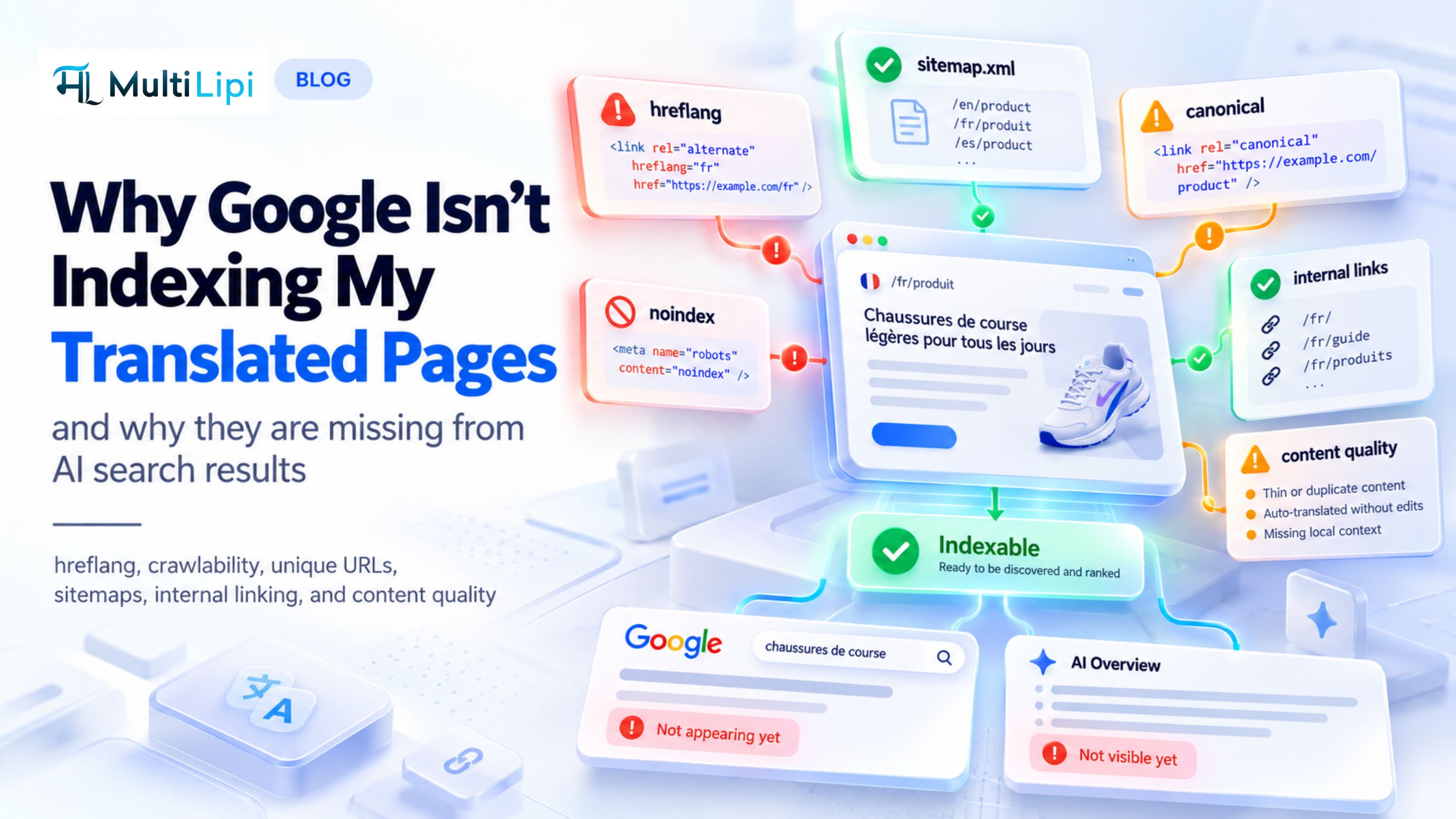

Le nouveau mandat SEO est de rendre le contenu citable, localisable, techniquement propre et visible sur les réponses de l'IA, SERP classiques, découverte sociale, voix et parcours linguistiques régionaux.
Introduction
La conversation SEO dans un paysage de recherche en évolution
Les gens trouvent des informations via un ensemble plus large de surfaces au-delà des recherches traditionnelles. Les outils d'IA, les requêtes vocales et la découverte sociale remodèlent la manière dont le contenu est présenté. La discipline reste essentielle, mais vous devez vous adapter aux nouveaux formats, intentions et plateformes.
Les changements mettent l'accent sur le sens, le contexte et l'utilité. Les signaux tels que la précision et la crédibilité des sources sont importants, tout comme la rapidité de la réponse. Votre objectif est d'aider l'IA à comprendre et à citer votre contenu, pas seulement à se classer pour une expression.
Pourquoi ce recadrage est important pour le SEO multilingue nécessite une architecture qui sert divers publics à travers les langues et les régions
La localisation qui ne fait que traduire du texte manque de visibilité mondiale et peut diminuer les performances globales du SEO. Une stratégie multilingue véritablement efficace nécessite une architecture qui sert divers publics à travers les langues et les régions, garantissant que le contenu localisé se classe bien dans les moteurs de recherche. La localisation assistée par l'IA préserve la valeur tout en élargissant la portée, améliorant ainsi la visibilité et l'optimisation pour les moteurs de recherche.
- Alignez le contenu sur l'intention de recherche locale dans chaque langue, en utilisant une formulation native et des exemples culturellement pertinents.
- Structurez les données pour que l'IA puisse extraire et citer des informations précises, y compris les formats de date, les unités et les références locales.
- Intégrez des flux de traduction qui maintiennent les signaux canoniques et Précision hreflang, évitant ainsi les problèmes de contenu dupliqué.
Chez MultiLipi, nous combinons la localisation évolutive avec une stratégie axée sur la recherche. Notre processus garantit que les traductions sont linguistiquement précises et optimisées pour la découverte, générant du trafic organique sur tous les marchés. Cela crée un site résilient, visible mondialement, avec un impact pratique et réel.
1. Le mythe de la mort : Démystifier le catastrophisme du SEO
Idées fausses courantes sur le déclin du SEO
Les gros titres suggérant un effondrement complet après chaque mise à jour de Google manquent la vue d'ensemble, surtout dans le contexte du récit de recadrage du SEO pour l'ère de l'IA : démystifier les affirmations de détérioration du SEO. Ce récit souligne que l'histoire porte sur les changements de stratégie et l'adaptabilité face à l'innovation, et non sur la disparition. Il appelle à une adaptation rapide au paysage en évolution plutôt qu'à succomber aux craintes exagérées de déclin, soulignant la nécessité pour les spécialistes du marketing d'embrasser le changement alors que l'IA transforme la façon dont nous abordons l'optimisation pour les moteurs de recherche.
Les marchés ne bougent pas non plus à l'unisson. La langue, la concurrence et l'intention locale créent des trajectoires variées. La diversification aide lorsque certaines régions montrent de la volatilité.
Ce que les données montrent réellement sur les différents marchés
La recherche organique reste un canal essentiel pour les marques crédibles, même si l'attribution devient plus complexe. Les meilleurs sites dépendent toujours du SEO, mais le mix inclut désormais Découverte assistée par l'IA et les surfaces non-Google.
Les améliorations des fonctionnalités SERP et des données structurées augmentent la visibilité au-delà des classements traditionnels. Ce changement crée des opportunités pour découverte de contenu et des clics de haute qualité lorsque vous vous alignez sur l'intention de l'utilisateur.
- Amérique du Nord : Intention locale et rapide boîtes de réponse récompenser le contenu concis et faisant autorité.
- Europe: architecture sensible à la langue et la précision hreflang exigent une architecture sensible à la langue.
- APAC: Croissance tirée par les surfaces non anglaises, la voix et le comportement mobile-first.
2. Après le déclin : L'évolution du SEO en 2026 et au-delà
Du SEO traditionnel à l'optimisation pour la recherche partout
Le SEO traditionnel était axé sur les classements, la densité des mots-clés et les signaux on-page. Alors que nous envisageons de redéfinir la stratégie SEO pour 2026 à travers le prisme de l'optimisation de la recherche partout, il est clair que le paysage a considérablement évolué. La visibilité s'étend désormais au-delà des facteurs SEO conventionnels et englobe aperçus IA, plateformes sociales et marchés. Votre stratégie doit être portable d'un contexte et d'un appareil à l'autre pour prospérer dans cette nouvelle ère. Des outils tels que ChatGPT 3.5 peuvent aider à rédiger et à optimiser des briefs de contenu qui s'alignent sur ces surfaces de découverte pilotées par l'IA, garantissant ainsi que votre approche est à la fois innovante et efficace.
L'objectif est d'être trouvable même lorsque la recherche n'est pas un parcours en un clic. Cela signifie façonner le contenu de manière à ce qu'il puisse être cité, résumé et repris par Systèmes d'IA ainsi que pour les lecteurs humains.
Le rôle de l'IA, des fonctionnalités SERP et des stratégies sans clic
aperçus IA et leur impact sur les classements, ainsi que les fonctionnalités SERP, génèrent désormais une grande partie de la visibilité initiale, fortement influencés par l'IA et les LLM qui remodèlent les stratégies de référencement. L'impact des expériences de recherche générées par l'IA sur le comportement de clic pour les mots-clés est profond, car le contenu structuré pour la découverte et la citation a une meilleure chance d'apparaître dans les résultats générés par l'IA. Cette tendance souligne comment les aperçus de l'IA affectent non seulement la perception des utilisateurs, mais améliorent également la visibilité des pages dans les résultats de recherche. Ceci est particulièrement vrai pour extraits mis en avant qui répondent plus efficacement aux requêtes des utilisateurs, entraînant des taux de clics plus élevés et des modèles d'engagement utilisateur modifiés.
Les stratégies sans clic sont courantes, mais elles reposent sur des sources crédibles qui fournissent des réponses rapides. Pour rester pertinent, optimiser pour des réponses concises et riches en faits et des signaux d'entité clairs.
- Structurez les données pour que l'IA puisse en extraire les faits clés avec précision.
- Privilégiez la clarté et la vérifiabilité à la longueur.
- Équilibrez l'optimisation sur la page avec des signaux hors plateforme tels que confiance de la marque et une autorité réelle.
Changements clés dans l'orientation et la mesure
Il y a un passage de la recherche de victoires en un clic à la construction durable, visibilité multiplateforme. Mesurez le succès avec des métriques qui reflètent comment le contenu est découvert, cité et fiable dans les aperçus IA, les extraits mis en avant et les pages de destination. Considérez la qualité du trafic, pas seulement le volume, et suivez les tendances du trafic organique parallèlement aux signaux de découverte pilotés par l'IA.
Exemple concret : un détaillant d'électronique grand public du Midwest met à jour ses guides de produits avec des données structurées, des FAQ de réponse rapide et des spécifications citables. En trois mois, les résumés d'IA référencent leurs spécifications dans les assistants d'achat sur les sites partenaires, augmentant le trafic qualifié de 18 %.
3. Le SEO multilingue comme moteur de croissance
Stratégies de localisation qui augmentent la visibilité dans toutes les langues
La localisation doit refléter les habitudes de recherche locales, les indices culturels et l'intention, pas seulement une traduction mot à mot. Associez les variantes linguistiques à des mots-clés spécifiques à la région et citez des exemples pertinents localement pour améliorer la pertinence. Pour des informations sur l'amélioration de ce processus, reportez-vous à le guide ultime du SEO pour la traduction de sites web.
Priorisez le contenu qui répond aux questions locales, traite des problèmes spécifiques à un pays et s'aligne sur les cycles d'achat locaux. Cette approche vous aide à atteindre un trafic organique que les traductions simples pourraient manquer.
- Recherche de mots-clés locaux qui reflète le comportement des consommateurs régionaux
- Calendriers de contenu adaptés à la langue, liés aux événements et saisons locaux
- Création de liens localisée par le biais de partenariats régionalement pertinents
Fondations techniques : hreflang, canonicalisation et intégration CMS
Une configuration technique solide évite la cannibalisation et garantit que les bonnes pages apparaissent pour le bon public. Signaux hreflang aident les moteurs de recherche à identifier la variante linguistique et régionale correcte.
Tags canoniques prévenir les problèmes de contenu dupliqué lorsque des éléments similaires existent dans plusieurs langues. Une stratégie canonique claire préserve l'équité des liens entre les localisations.
- mise en œuvre de hreflang couvrant toutes les langues et régions cibles
- Cohérent références canoniques sur les pages multilingues
- Intégrations CMS qui automatisent Commutation de langue et propagation des métadonnées
4. Architecture de contenu pour l'ère de l'IA
Données structurées, formats compatibles avec l’IA et segmentation de contenu
Les données structurées aident l'IA à comprendre et à référencer le contenu avec précision. La mise en œuvre d'une stratégie de SEO programmatique et de pages de glossaire améliore cela en organisant les termes et concepts essentiels, ce qui facilite l'indexation et la présentation des informations par les moteurs de recherche. Utilisez le schéma pour les produits, les avis, les FAQ et les événements afin de prendre en charge les extraits rapides et les citations fiables. Gardez les réponses concises et vérifiées.
Structurez le contenu pour plus de clarté avec des listes à puces, des paragraphes courts et des sections clairement étiquetées. Des titres descriptifs améliorent la navigation pour les humains et l'IA.
- Utiliser Schémas FAQ et comment faire pour capturer les requêtes courantes
- Annotez les signaux d'auteur et d'éditeur pour renforcer la confiance
- Adoptez des blocs de contenu modulaires pour une réutilisation sur différentes surfaces
Contenu piloté par la programmation et la localisation pour maintenir le trafic
Le contenu programmatique s'adapte à travers les sujets et les localités sans perdre de pertinence. Créez des modèles qui s'adaptent aux données régionales, à la saisonnalité et à l'intention changeante des utilisateurs.
Le contenu axé sur la localisation s'aligne sur le comportement de recherche local et les parcours consommateurs, surtout lorsqu'il est amélioré par la mise à l'échelle de contenu assistée par l'IA et les stratégies SEO. En associant des données localisées à des cadres de contenu mondiaux, vous pouvez optimiser votre visibilité et votre pertinence tout en restant cohérent et complet.
- Pages pilotées par des modèles qui intègrent des variables spécifiques à la locale
- Modules de contenu dynamiques pour les sections prêtes à la transcréation
- Gouvernance du contenu pour préserver la voix tout en permettant une localisation rapide
5. Intégration du SEO aux flux de travail de localisation mondiaux
Intégrations en une ligne de code et connecteurs CMS
Le SEO transparent repose sur des intégrations légères qui s’intègrent à votre flux de travail. Un script d’une seule ligne peut exposer les signaux hreflang, les balises canoniques et les sitemaps multilingues sans modifier les modèles. En pratique, cela réduit les erreurs humaines et maintient les métadonnées synchronisées lors de la publication en plusieurs langues.
Les connecteurs CMS automatisent la commutation linguistique, la propagation des métadonnées de localisation et la cartographie des URL régionales. Cas d'utilisation : un éditeur ajoute une nouvelle locale dans le CMS, et le connecteur crée automatiquement des URL tenant compte de la locale, met à jour les sitemaps et propage les références canoniques pour éviter le contenu dupliqué.
- Variantes linguistiques automatisées et génération d'URL
- Métadonnées synchronisées entre les localisations
- Sitemap uniforme et signaux d'indexation par région
Pipelines de traduction assistée par IA qui préservent la valeur SEO
La traduction doit maintenir la valeur SEO tout en sonnant naturel. Créez des pipelines qui associent les mots-clés à des termes spécifiques à la locale, respectent l'intention de recherche et injectent hreflang pendant la traduction.
Assurez-vous que les pages traduites héritent de l'autorité en préservant les références canoniques et en renvoyant au contenu original lorsque cela est approprié. Des vérifications pratiques détectent les signaux SEO manquants ou mal alignés avant la publication.
- Traduction tenant compte des mots-clés avec alignement de l’intention régionale
- Propagation des métadonnées à chaque étape de la localisation
- Contrôles de qualité pour les balises de titre, les méta-descriptions et les données structurées
6. Nouveaux signaux de classement et tactiques qui fonctionnent
E-A-T
L'expertise, l'autorité et la confiance demeurent des moteurs de classement fondamentaux. Renforcez votre crédibilité avec des biographies d'auteurs incluant des qualifications vérifiables et des liens vers des profils professionnels. Citez des sources primaires et appuyez vos affirmations avec des affiliations vérifiables. Mettez à jour le contenu lorsque de nouvelles preuves émergent pour renforcer la confiance des lecteurs et des moteurs de recherche.
Fraîcheur du contenu
Maintenez les pages principales à jour avec des données fraîches, des horodatages révisés et des informations mises à jour pour signaler la pertinence. Par exemple, actualisez un guide de produit après la sortie d'un micrologiciel ou ajoutez une statistique de marché récente du dernier rapport. Incluez une date de mise à jour clairement visible et une brève note sur ce qui a changé.
Signaux utilisateurs multilingues
Mesurez les performances par langue et par région pour identifier les lacunes. Si une version espagnole affiche un taux de rebond plus élevé sur les pages produits, ajustez la mise en page et traduisez les appels à l'action pour qu'ils correspondent aux habitudes d'achat régionales. Localisez non seulement la langue, mais aussi le format, les exemples et les mesures familiers à chaque public.
Exploiter la vidéo courte, la voix et les fonctionnalités sur les surfaces non-Google
La découverte inclut désormais des miniatures vidéo, des clips courts et des résultats vocaux au-delà de la recherche traditionnelle. Créez du contenu adapté aux extraits avec des réponses concises, des légendes, des chapitres et des réponses directes. Alignez les métadonnées vidéo sur les sujets principaux pour améliorer la visibilité et le taux de clics inter-canaux.
- Rédigez des scripts de 30 à 60 secondes qui répondent à une seule question avec des étapes concrètes
- Utilisez les fonctionnalités de la plateforme comme les FAQ, les chapitres et les réponses rapides pour renforcer votre présence
7. Mesure et KPIs pour un SEO post-déclin
Que suivre dans les campagnes multilingues
Suivez les signaux qui reflètent l'intention localisée et les performances inter-marchés. Concentrez-vous sur la manière dont chaque variante linguistique contribue à la visibilité globale, à la qualité du trafic et aux conversions. Par exemple, comparez une page de destination en espagnol avec une version française pour voir laquelle génère un trafic qualifié plus élevé.
- Trafic organique par lieu et langue
- CTR et taux de clics organiques par région
- Métriques d'expérience de page dans chaque langue, y compris les Core Web Vitals
Différents marchés nécessitent des points de référence distincts. Comparez la croissance d'une année sur l'autre par région pour évaluer la résilience et identifier les lacunes dans l'efficacité de la localisation. Suivez les changements saisonniers, comme l'augmentation des requêtes japonaises pendant la Golden Week ou les pics de recherche arabes autour du Ramadan.
- Taux de rebond et temps passé sur la page par langue
- Pages indexées par locale et accessibilité de l'exploration
- Présence des fonctionnalités SERP locales et impact sur la visibilité
Modèles d'attribution sur les canaux de localisation et internationaux
Adoptez une attribution qui reflète les parcours multilingues. Allez au-delà du dernier clic pour reconnaître l'influence de la découverte grâce à des points de contact localisés, en particulier lorsque vous analysez la dynamique du trafic organique par rapport au trafic payant et les changements résultant du CTR. Employez une cartographie d'entonnoir spécifique à la langue pour éviter de mal attribuer l'impact et pour mieux comprendre les contributions uniques des deux sources de trafic.
- Attribution multicanal sur les signaux organiques, sociaux et de marché
- Pondération des canaux qui tient compte des entonnoirs linguistiques et régionaux
- Tests d'incrémentalité pour séparer l'impact de la localisation des campagnes mondiales
FAQ
Le SEO est-il toujours pertinent en 2026 ?
Oui. Le SEO reste un canal fondamental pour la découverte organique, mais son approche a évolué. L'accent est mis sur l'intention, le contexte et l'accessibilité sur des plateformes au-delà des résultats de recherche traditionnels. Par exemple, une boulangerie locale peut réussir avec des extraits de recherche, des packs de cartes et des requêtes vocales sur mobile, pas seulement sur une SERP de bureau.
À quoi dois-je m'attendre des données dans le paysage actuel ?
Attendez-vous à une vision équilibrée : le trafic organique global peut évoluer différemment selon les marchés, mais des opportunités persistent grâce aux recherches assistées par IA, aux requêtes multilingues et aux plateformes autres que Google. Recherchez des signaux qui reflètent le comportement local et la découverte spécifique à la plateforme. Suivez les changements saisonniers et les différences d'appareils ; une semaine avant les fêtes peut entraîner un pic des recherches vocales et des clics à proximité.
Comment le SEO multilingue s'intègre-t-il dans une stratégie mondiale ?
Le SEO multilingue doit être intégré dès le départ. La localisation n'est pas seulement une traduction ; elle inclut l'alignement de l'intention, l'exactitude technique et la canonicalisation appropriée pour préserver l'équité entre les langues. Commencez par une carte linguistique pour les marchés principaux, puis auditez les hreflang et les données structurées trimestriellement pour éviter la dilution.
- Concentrez-vous sur la précision des hreflang pour éviter la dilution inter-langues
- Coordonner les traductions avec les métadonnées et les données structurées pour la cohérence
- Surveiller les performances spécifiques à la langue et adapter le contenu aux intentions régionales
Quel rôle l'IA et les LLM jouent-ils dans le SEO aujourd'hui ?
L'IA assiste la planification, l'optimisation et l'analyse des données de contenu. Elle complète l'expertise humaine pour améliorer la pertinence, accélérer les itérations et adapter le contenu à divers publics tout en maintenant l'exactitude et la crédibilité. Utilisez l'IA pour rédiger des plans, puis vérifiez les faits auprès d'experts et de concurrents locaux pour éviter le contenu générique.
Quelles métriques sont importantes pour le SEO post-déclin ?
Suivez les visites organiques localisées, le CTR par locale, le temps passé sur la page et les conversions par langue. Incluez l'attribution multicanal pour capturer l'impact de la localisation sur différentes surfaces. Utilisez l'analyse de cohorte pour séparer l'effet de la locale, de l'appareil et de la plateforme des tendances générales du marché.
Conclusion
L'idée que le SEO est en train de mourir manque un changement critique dans la manière dont la découverte se produit. Il n'y a plus un seul champ de bataille ; vous optimisez sur un spectre de surfaces, de langues et de formats. C'est le moment de se recentrer, pas de battre en retraite.
Chez MultiLipi, nous voyons une opportunité dans la combinaison Localisation assistée par IA avec une discipline SEO intelligente. La localisation renforce la pertinence tandis que l'IA accélère l'itération et préserve l'équité entre les marchés. Le résultat est une visibilité soutenue sans compromettre l'exactitude.
- Pensez global, agissez local : priorisez les signaux multilingues qui reflètent l'intention réelle de l'utilisateur dans chaque marché.
- Saisissez les opportunités de zéro clic et de résultats enrichis pour capter l'attention au-delà des liens traditionnels.
- Intégrez les flux de traduction avec les métadonnées SEO pour maintenir la cohérence entre les localisations.
Sujets à haute priorité dans le contexte
Vous trouverez ci-dessous des points basés sur des données qui décrivent le paysage actuel et réfutent les récits pessimistes. Chaque sujet est exploré avec un contexte concret pour vous aider à planifier des stratégies multilingues pratiques.
La plateforme de Smartsheet illustre comment les flux de contenu structurés et collaboratifs accélèrent programmes SEO mondiaux. Ses modèles de projet inter-langues et ses pipelines de localisation automatisés alignent les équipes, garantissant des métadonnées cohérentes et une localisation évolutive à travers les marchés.
Baisse minimale du trafic de recherche organique
Le cas de la stabilité du SEO est étayé par des analyses à grande échelle sur des dizaines de milliers de sites. Le trafic de recherche organique n'a montré que des baisses modestes au cours de certaines périodes, les tendances générales indiquant une résilience plutôt qu'un effondrement. Cela contredit les affirmations dramatiques de fortes baisses et renforce la valeur d'une discipline SEO durable aux côtés de nouvelles stratégies.
Tendances du trafic par taille de site et par catégorie
Les données récentes révèlent une répartition inégale. Les 10 principaux sites ont connu des gains modestes en trafic SEO, tandis que les sites de taille moyenne ont subi des baisses plus importantes. Les catégories de niche telles que les actualités, la santé et le divertissement connaissent souvent des baisses plus marquées, tandis que l'habillement, le shopping et les places de marché continuent de croître. Cela souligne l'importance d'adapter les stratégies par segment de marché et par taille de site.
Utilisation de données de panel à grande échelle pour l'analyse du trafic
Des informations fiables proviennent de vastes sources de données de panel qui combinent plusieurs signaux. Ces études montrent une forte corrélation avec les performances réelles de recherche et offrent une vision plus claire que les petites enquêtes. S'appuyer sur des données à grande échelle permet d'éviter les biais cognitifs et les erreurs d'échantillonnage courants dans les preuves anecdotiques.
Stabilité et croissance du trafic des moteurs de recherche
Les tendances historiques montrent des périodes de croissance et de stabilisation. Après des périodes d'expansion, le trafic de recherche est resté résilient, les visiteurs de Google continuant de croître au cours de certains trimestres. Ces modèles soutiennent un accent stratégique sur la recherche organique aux côtés des surfaces évolutives.
Part de clics et clics publicitaires de Google
Même avec des changements entre les clics organiques et payants, une grande majorité de clics favorise toujours les résultats organiques. Les clics publicitaires ont augmenté modestement, mais le trafic organique reste le principal moteur de volume. Cela souligne l'importance continue de l'optimisation pour la découverte organique dans des contextes multilingues.
Impact des aperçus IA sur le CTR
Les aperçus IA peuvent réduire le taux de clics lorsqu'ils sont affichés, affectant les mots-clés informationnels. Ils apparaissent désormais dans une minorité de résultats mais ont un impact significatif sur la manière dont les utilisateurs découvrent le contenu. Les extraits mis en avant et les aperçus IA évoluent de concert, alors planifiez des formats de contenu qui restent précieux même lorsque les clics directs varient.
Tout au long du processus, le message principal reste clair : le paysage de la recherche évolue, il ne s'effondre pas. La meilleure stratégie consiste à combiner la localisation avec l'optimisation guidée par l'IA, en veillant à ce que le contenu reste découvrable à travers les langues et les surfaces.
Exemples de flux de travail inter-appareils
Les exemples de plateformes suivants de la source renforcent comment la collaboration structurée, les systèmes de conception et les flux de travail inter-canaux soutiennent la découverte multilingue moderne.
La plateforme d'engagement client de Braze renforce la manière dont les signaux multicanaux et les expériences personnalisées s'alignent sur la découverte par l'IA, aidant ainsi les marques à se coordonner localisation et la messagerie à grande échelle sur différentes plateformes et langues.
L'approche de Canva montre comment le contenu axé sur la conception s'adapte aux différentes langues : les modèles, les visuels et les actifs de marque sont facilement localisés, permettant une découverte cohérente à partir de aperçus IA vers les surfaces sociales sans diluer l'identité.
La plateforme de gestion de travail d'Asana démontre comment une collaboration claire et une orchestration des tâches s'étendent aux équipes et aux régions, reflétant comment un contenu structuré et multilingue et des flux de travail assistés par l'IA stimulent une découverte cohérente et localisation dans les programmes de référencement.